
Optimizing Sample Integrity with 2D Cryogenic Vials
A practical article for buyers checking how coding, handling, and storage discipline support consistent sample tracking in biobank workflows.
Read ArticleRongda Bio sample storage line
Rongda Bio 2D cryogenic vials support laboratories that need compact, scannable sample storage with clear identification at low temperatures. Buyers reviewing a cryogenic vials manufacturer can compare code readability, sterile handling, and volume coverage before they request samples.
The same product line fits teams sourcing Laboratory cryogenic tubes for biobanks, clinical research, biologics, and cell or gene therapy sample handling. The listed range covers 0.5 mL to 5.0 mL and a -196 degrees Celsius to 121 degrees Celsius use window, giving procurement teams a practical starting point for selection.
A 2D code plus 3-in-1 coding structure supports freezer-side organization, batch control, and retrieval planning when the sample count grows and manual label checking becomes slower.
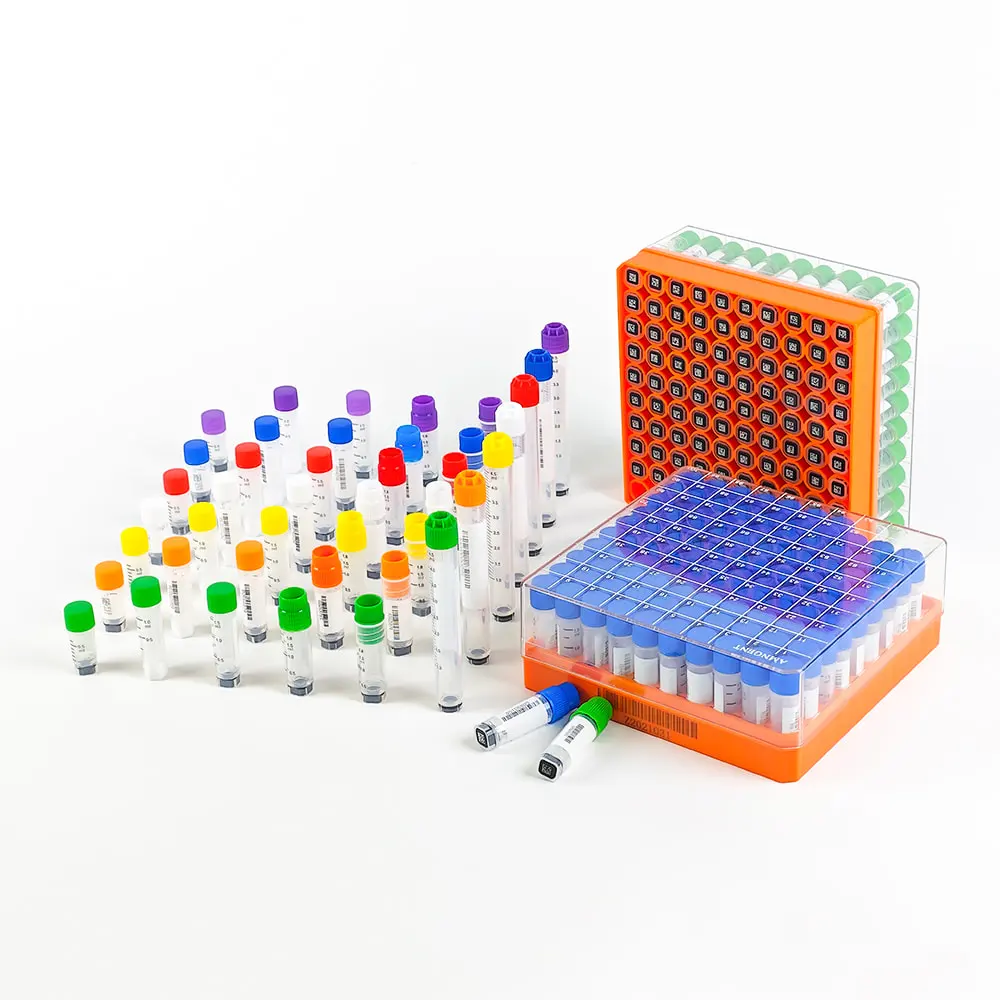
These 2D cryogenic vials are intended for sample programs that need traceable storage, compact handling, and stable identification across freezer workflows. Procurement teams can review the product page for coding format, volume range, and temperature data, then align the vial choice with sample type, inventory logic, and receiving checks.
Traceable coding
2D code and 3-in-1 identification support freezer-side sample control and faster retrieval checks.
Wide use window
The listed temperature range supports both low-temperature storage and warm-side handling review.
Buyer-ready range
Multiple volumes make it easier to match one vial family to different sample plans.
| Specification | Details |
|---|---|
| Product Line | 2D Cryogenic Vials |
| Material | Medical-grade polypropylene and polyethylene, as stated on the product page |
| Volume Range | 0.5 mL, 1.0 mL, 1.5 mL, 2.0 mL, and 5.0 mL |
| Coding System | 2D code plus 3-in-1 coding structure |
| Temperature Range | -196 degrees Celsius to 121 degrees Celsius |
| Sterility | E-beam sterilized; DNase-free, RNase-free, and endotoxin-free |
| Primary Uses | Biobanks, biologics, cell and gene therapy sample storage |
| Cap or Color Options | To be confirmed by project requirements |
| Packaging and Box Fit | To be confirmed by project requirements |
These Rongda Bio articles support buyer research on sample storage, vials, and supplier comparison.
A practical article for buyers checking how coding, handling, and storage discipline support consistent sample tracking in biobank workflows.
Read ArticleThis article helps procurement teams review the features that matter when cryogenic storage vials are compared for pharmaceutical and cold-chain sample programs.
Read ArticleA useful comparison for teams reviewing preservation needs, sample traceability, and supplier selection for advanced therapy storage programs.
Read ArticleFive-star procurement rating
We reviewed the coding format, temperature range, and handling notes for a multi-site storage plan. The product information was clear enough for an initial supplier comparison and sample request.
Five-star procurement rating
The 2D code plus 3-in-1 coding structure helped our team discuss freezer organization with the end user. That made it easier to prepare a clean quotation package for the lab supply channel.
Five-star procurement rating
We needed a vial family that supports traceable storage for research samples and future repeat retrieval. The specifications gave us enough detail to move forward with internal review.
2D coding supports sample identification when labels must remain readable through freezing, rack movement, and repeated retrieval. It gives laboratory teams a machine-readable layer for inventory control, which is helpful when many vials share similar size, cap color, or study ownership.
Buyers should verify the declared working range against their real storage process, including freezer conditions, transfer steps, and any warm-side handling before long-term storage. The product page lists a range from -196 degrees Celsius to 121 degrees Celsius, so procurement teams can align it with their sample workflow and receiving checks.
Volume choice should follow aliquot size, retention needs, and the number of repeat tests expected from each sample. Smaller volumes are useful when samples are split into many working portions, while larger volumes help when a retained reserve is kept for later review or confirmatory testing.
E-beam sterilized status indicates that the vial supply has been processed with an electronic beam method intended for sterile laboratory handling. Procurement teams should still review the supplier's batch records, packaging condition, and internal receiving process so the status fits the buyer's own quality checks.
A sourcing team should confirm material, volume range, coding method, sterility status, intended storage temperature, packaging quantity, and any rack or box compatibility requirement. These details help prevent mismatches between the selected vial and the buyer's freezer inventory system.
A strong inquiry should list the target volume mix, expected quantity, preferred coding workflow, sample application, packaging needs, and destination market. If the buyer also needs matching storage accessories or labeling support, that should be included at the same time so the supplier can prepare a complete response.