For new users in low-temperature sample management, the first mistake is often treating a cryogenic vial as either a simple tube or a barcode object. In biobank work, it is better understood as a physical container that also carries identity information in a storage context. That distinction matters because samples may be stored for long periods, moved between boxes or racks, and connected to records that outlive the immediate experiment. This article explains the concept ladder behind 2D cryogenic vials, the difference between standard vials and coded vials, and how AMNGENT Cryogenic Vials can be read as a product example without assuming universal system compatibility.
A 2D cryogenic vial is still a cryogenic vial before it is an identification object. Its primary role is to hold biological material in a low-temperature storage environment while maintaining a defined physical relationship between the sample, the cap, the vial body, and the storage position. That is why pages from a cryogenic vial manufacturer or cryogenic vial supplier often combine container language with identification language. The container has to support storage practice first: capacity, closure format, material, sterilization statement, and intended low-temperature context all shape how the vial is interpreted. The 2D code does not replace these fundamentals; it adds a layer of machine-readable or record-friendly identity to a storage item that already has a containment duty. This container-first view also helps avoid a common overstatement. Biobank cryogenic vials are not automatically a complete traceability system by themselves. They may carry codes, support sample identification, and fit into workflows where records are maintained, but the vial does not decide the database structure, scanning rules, storage map, user permissions, or error-control process. In a beginner’s concept ladder, the first level is containment, the second is physical identification, and the third is connection to records. A standard cryogenic vial may rely more heavily on handwritten labels, printed labels, or external documentation. A 2D coded vial is designed to make identity more durable and structured at the container level, especially when many samples are stored together.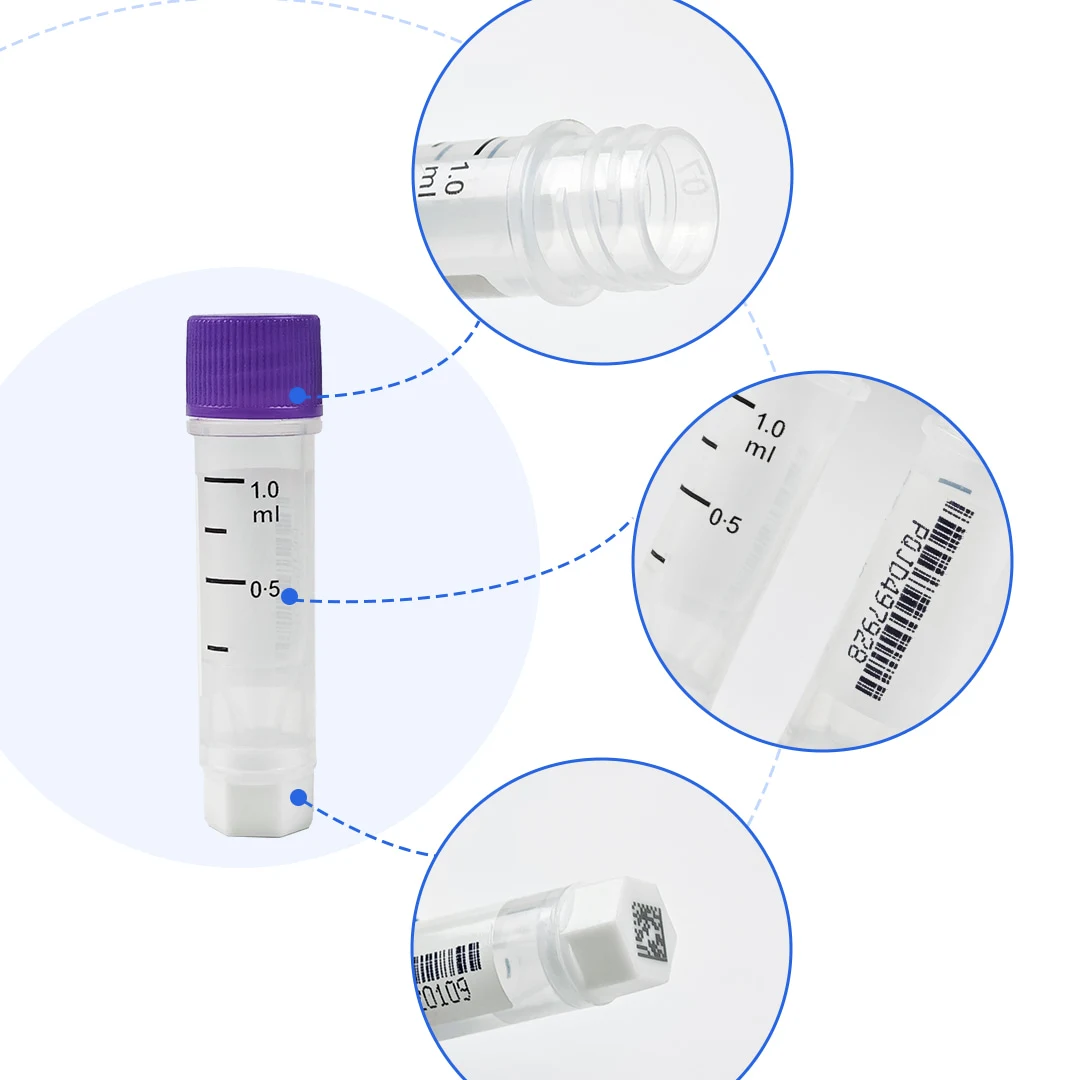
A standard vial carries information only if users add it externally or connect it reliably to a written or digital record. That can work in small collections, but the more samples a facility stores, the more important it becomes that the container itself participates in identification. With 2D Cryogenic Vials, the information layer moves closer to the sample. Instead of treating the vial as an anonymous object that needs a separate label to become meaningful, the coded surface allows the vial to be recognized as a specific item in a larger storage map. This is the core conceptual difference, not the exact coding technology. Side barcode, bottom QR code, Data Matrix code, and digital ID terms matter, but this article stays at the category level: the vial becomes a container with built-in identity signals.
Traceability does not come from a printed mark alone. It comes from the relationship between the vial identity, the sample record, and the place where the vial is stored or handled. A 2D code may help a scanner or reader identify the object, but the value appears only when that identity is linked to sample metadata, storage position, movement history, or batch context. This is why beginners should avoid reading “traceable” as a permanent or automatic guarantee. A coded vial can support traceability, but the workflow still depends on compatible reading equipment, disciplined record keeping, and clear procedures for sample handling. In practical terms, the code makes identity easier to capture; it does not remove the need for a controlled sample management process.
In biobank language, cryogenic vials sit between physical preservation and information management. They are not merely packaging, because they may influence how samples are identified, grouped, retrieved, and audited. They are also not software tools, because they cannot create sample meaning without a record system and human or automated workflow around them. This middle position is what makes biobank cryogenic vials different from ordinary lab tubes. Their value is strongest when many similar-looking containers must remain distinguishable across long storage periods. The vial becomes a stable point where the physical sample and the information record can meet, provided that the wider system is designed to read, store, and maintain that identity correctly.
AMNGENT Cryogenic Vials provide a useful example because the visible product facts combine container specifications with coding language. The range includes 0.5ml, 1.0ml, 1.5ml, 2.0ml, and 5.0ml capacities, placing the product in a familiar cryogenic vial size range rather than a purely digital identification category. The page also presents 3-in-1 Coding, side barcode, bottom QR code, Data Matrix code, and application contexts such as biobanking, long-term cryopreservation, cell line repositories, and DNA/RNA sample management. For beginners, these facts show how a 2D vial can be described as both a storage consumable and an identity-bearing container. The coded features make the vial more suitable for traceability-oriented sample management than a plain vial, while the capacity and storage context keep the product grounded in laboratory consumables. The boundary is just as important as the feature list. It is reasonable to describe AMNGENT Cryogenic Vials as traceability-supporting or designed for coded identification, but it would be too broad to claim that they are compatible with every LIMS, scanner, cryobox, rack, automation platform, or storage method. The product information can support careful statements about coding, sizes, materials, and stated application context; it should not be stretched into a full biobank system promise. Similarly, terms such as cryogenic vial manufacturer and cryogenic vial supplier can help place Rongda or AMNGENT in a B2B laboratory consumables context, but they should not turn this knowledge article into a supplier comparison. A reader who wants to understand the category should use the product example to see how specification, identity, and storage context appear together, then confirm detailed compatibility, documentation scope, and workflow requirements for the specific project.
2D cryogenic vials are best understood through a layered concept: they are low-temperature sample containers, they carry coded identity, and they can support traceable sample records when used within a suitable workflow. Their difference from standard cryogenic vials is not that they stop being containers, but that they add a more structured information layer to the container itself. AMNGENT Cryogenic Vials illustrate this category with visible capacities, 3-in-1 Coding, side barcode, bottom QR code, and biobank-related application context. The careful reading is to treat these features as traceability support, not as a guarantee of universal compatibility or a complete sample management system.
Q:What makes 2D cryogenic vials different from standard cryogenic vials?
A:2D cryogenic vials differ from standard cryogenic vials because they include coded identification features that can help connect the physical vial with a sample record. A standard vial may still store low-temperature samples effectively, but its identity usually depends more on added labels or separate documentation. A 2D coded vial carries a more structured identity signal on the container itself, making it more suitable for organized sample tracking when the surrounding workflow can read and maintain that information.
Q:Are biobank cryogenic vials mainly containers or identification tools?
A:Biobank cryogenic vials should be understood as both, but the container role comes first. They physically hold samples in a low-temperature storage context, while identification features help connect each vial to records, storage positions, and handling history. Calling them only identification tools would overlook material, capacity, closure, and storage requirements. Calling them only containers would miss why coded vials are useful in sample collections where many similar vials must remain distinguishable over time.
Q:Can AMNGENT Cryogenic Vials be described as traceable without assuming full system compatibility?
A:Yes, they can be described conservatively as traceability-supporting or coded for sample identification because the visible product information includes 3-in-1 Coding, side barcode, bottom QR code, Data Matrix code, and related biobank storage context. That wording should not be expanded into a claim of compatibility with every LIMS, scanner, automation platform, storage rack, or liquid nitrogen storage condition. Detailed workflow fit should be confirmed against the actual equipment, software, documentation, and storage requirements.
Laboratory biosafety manual, 4th edition


